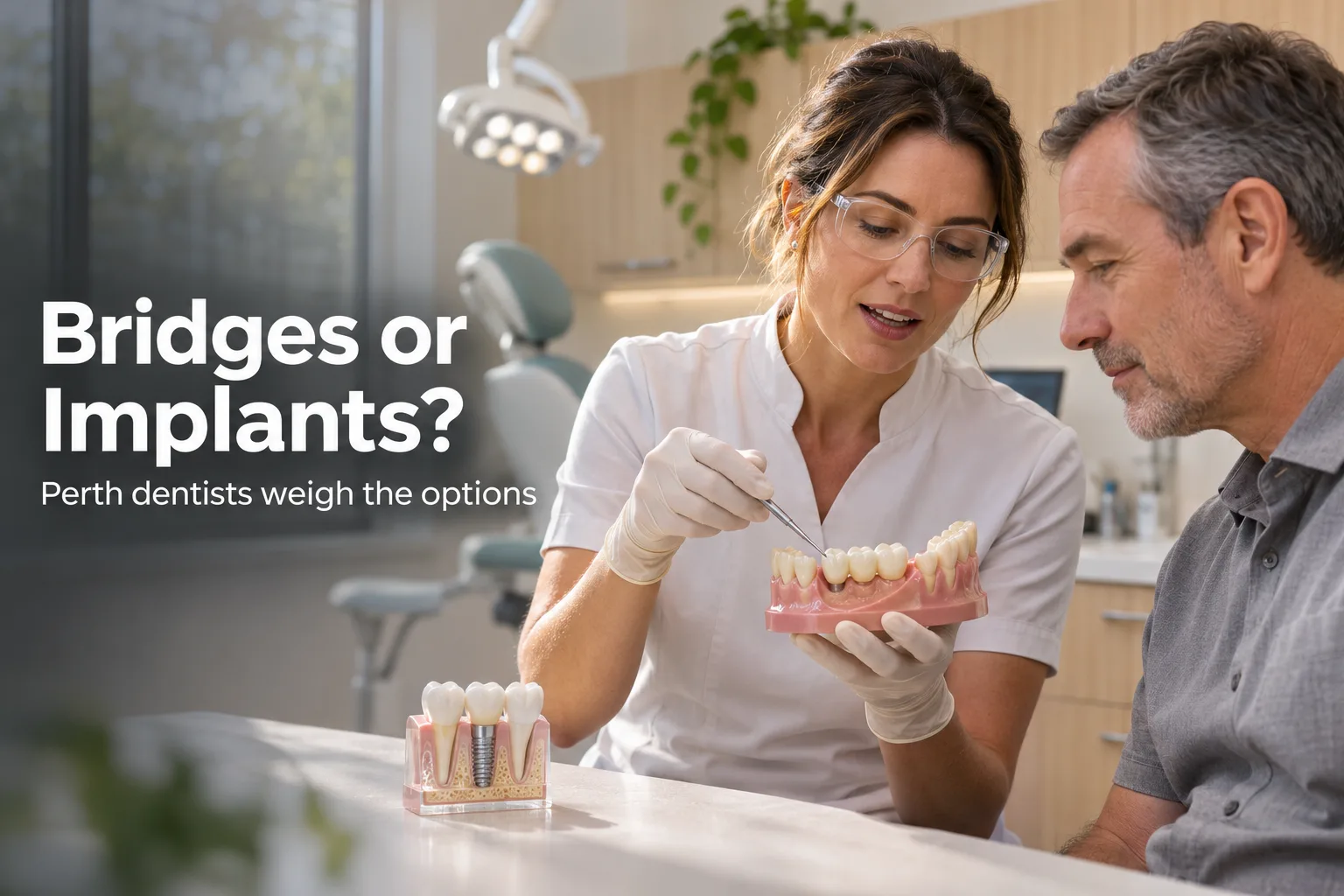
Understanding Your Tooth Replacement Options
Losing a tooth can affect more than just your smile. It can impact your bite, your ability to chew properly, and even the alignment of your remaining natural teeth over time. If you are missing one or more teeth, you have several modern restorative options available. Two of the most common and effective solutions are dental bridges and dental implants. While both aim to restore function and aesthetics, they work in very different ways and suit different situations. This guide will help you understand the key differences between these two popular treatments, allowing you to make an informed decision about your oral health. For residents in Yokine, Albany, and Denmark, Radiant Smiles Dental Care offers comprehensive consultations to discuss which tooth replacement option best suits your individual needs, lifestyle, and budget.
What Is a Dental Bridge?
A dental bridge is a restorative appliance that literally bridges the gap created by one or more missing teeth. It consists of one or more artificial teeth, called pontics, held in place by dental crowns that are cemented onto the natural teeth on either side of the gap, known as abutment teeth. Bridges can be made from various materials, including porcelain, ceramic, or metal fused to porcelain, offering a natural-looking appearance that blends seamlessly with your smile. They are a non-surgical option that can usually be completed in just a couple of dental visits, providing a quicker path to a full smile. One of the key considerations is that the adjacent teeth must be shaped to support the bridge. When looking for information on dental bridges perth, it is important to find a clinic that prioritises a precise fit to ensure longevity and comfort. A well-fitted bridge can last for many years with proper oral hygiene and regular dental check-ups, making it a popular choice for replacing one or two missing teeth in a row.
What Is a Dental Implant?
A dental implant is a more permanent, standalone solution for tooth loss. It involves surgically placing a small titanium post into the jawbone, which acts as an artificial tooth root. Once the bone has healed and fused with the implant, a process called osseointegration, a custom-made crown is attached to the post. Implants do not rely on neighbouring teeth for support, which helps preserve the health of your natural teeth. However, the process requires oral surgery and a longer healing period, often taking several months from start to finish. The success of an implant depends heavily on the quality and quantity of the jawbone available. As outlined by Healthdirect Australia, implants can be an excellent long-term investment in your oral health, particularly for a single missing tooth where preserving adjacent teeth is a priority. They are also a strong option for replacing multiple teeth when a traditional bridge is not feasible.
Key Factors to Consider When Choosing
Making the right choice depends on several personal factors. Your dentist will guide you, but understanding these elements helps you participate in the decision.
Oral Health and Bone Density
Dental implants require sufficient jawbone to anchor the post securely. If you have experienced significant bone loss, a bone graft might be needed, or a dental bridge might be the more straightforward option. Bridges require healthy abutment teeth on either side of the gap, so the condition of your existing teeth is a major factor.
Cost and Treatment Time
Generally, a dental bridge is less expensive upfront and can be completed in a few weeks. Implants involve a higher initial cost and a treatment timeline of several months due to the healing required. Your private health insurance may also cover different portions of each treatment, so it is worth checking your policy details.
Long-Term Maintenance
A bridge can make cleaning underneath the pontic more challenging, requiring special floss threaders to prevent decay. An implant is cared for like a natural tooth but requires meticulous hygiene to prevent peri-implantitis. The Better Health Channel provides useful resources on maintaining both types of restorations to ensure they last as long as possible.
Aesthetics and Feel
Dental bridges can often provide a very natural look, especially for front teeth. However, because an implant is embedded in the bone, it can feel more like a natural tooth and helps stimulate the jawbone, preventing the sunken appearance that can occur with long-term tooth loss.
Making an Informed Decision with Your Dentist
Ultimately, the best way to choose between a dental bridge and an implant is to have a thorough examination and discussion with your dentist. Your dentist will take X-rays, assess your gum health, and discuss your aesthetic goals and budget. At Radiant Smiles Dental Care, we take the time to explain all available options so you feel confident in your decision. Whether you are visiting our Yokine clinic on Flinders Street or our locations in Albany and Denmark, our team is committed to helping you restore your smile with the most suitable treatment. We believe in providing affordable family and cosmetic dentistry without compromising on quality. Contact our friendly team today at (08) 9440 3654 to schedule a consultation and take the first step toward a complete, confident smile.